
Abstract
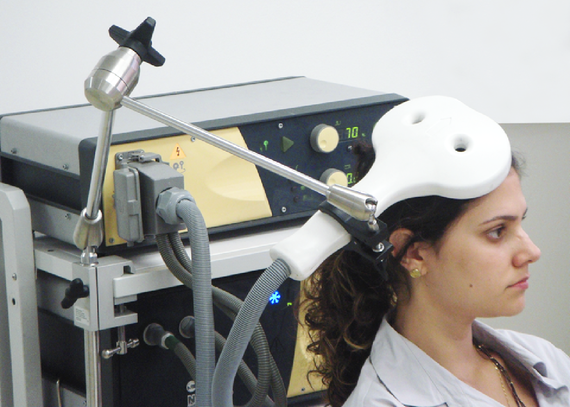
Design, contingent, and research methods. The study was conducted based on the Department of Autoimmune and Degenerative Diseases of the Nervous System, the Center for Multiple Sclerosis of the Institute of Neurology, Psychiatry, and Addiction of the National Academy of Medical Sciences of Ukraine. The results were obtained by examining 110 patients with multiple sclerosis (73 women and 37 men). The diagnosis was made according to the criteria of McDonald et al., 2017. All patients were divided into an intervention group who received a course of pTMS and a comparison group without the use of non-invasive neuromodulation. For noninvasive neuromodulation in the process of treatment and rehabilitation, rTMS was used. The course of treatment was performed on a MagVenture, MagPro X100, and an 8-shaped inductor (coil). Serum levels of cortisol, thyroid-stimulating hormone (TSH), total thyroxine (T4), and BDNF were determined.
Results. The use of TMS did not significantly affect the serum cortisol content of patients with progressive types of MS but had a positive effect on GGAS in patients with remitting type. TMS increased the concentration of neurotrophin BDNF in the group of patients with RT MS, and less pronounced, but also significantly - in the group of VPT. TMS led to an increase in TSH levels in the group of patients with RT MS but did not affect the concentration of total thyroxine in the serum. The most sensitive to the effects of TMS is the remitting type of disease.
Conclusion. Neurotrophins and hormones play an important role in the processes of remyelination and neuroplasticity. The use of selected parameters of rTMS has a positive effect on the hypothalamic-pituitary system of regulation of glucocorticoid and thyroid hormones, as well as on neurotrophic processes in the CNS in the development of multiple sclerosis. TMS opens new prospects for non-invasive neuromodulation in patients with MS.
Full-text of the article is available for this locale: Українська.
References
- Glass CK, Saijo K, Winner B, Marchetto MC, Gage FH. Mechanisms underlying inflammation in neurodegeneration. Cell. 2010;140(6):918-34. DOI: doi.org/10.1016/j.cell.2010.02.016
- Kern S, Schultheiss T, Schneider H, Schrempf W, Reichmann H, Ziemssen T. Circadian cortisol, depressive symptoms and neurological impairment in early multiple sclerosis. Psychoneuroendocrinology. 2011;36(10):1505-12. DOI: doi.org/10.1016/j.psyneuen.2011.04.004
- Tomassini V, Onesti E, Mainero C, et al. Sex hormones modulate brain damage in multiple sclerosis: MRI evidence. J Neurol Neurosurg Psychiatry. 2005;76(2):272-5. DOI: doi.org/10.1136/jnnp.2003.033324
- Calzà L, Fernandez M, Giardino L. Cellular approaches to central nervous system remyelination stimulation: thyroid hormone to promote myelin repair via endogenous stem and precursor cells. J Mol Endocrinol. 2010;44(1):13-23. DOI: doi.org/10.1677/JME-09-0067
- Kern S, Krause I, Horntrich A, Thomas K, Aderhold J, Ziemssen T. Cortisol awakening response is linked to disease course and progression in multiple sclerosis. PLoS One. 2013;8(4):e60647. DOI: doi.org/10.1371/journal.pone.0060647.
- Pereira GM, Soares NM, Souza AR, Becker J, Finkelsztejn A, Almeida RMM. Basal cortisol levels and the relationship with clinical symptoms in multiple sclerosis: a systematic review. Arq Neuropsiquiatr. 2018;76(9):622-34. DOI: doi.org/10.1590/0004-282X20180091
- Burfeind KG, Yadav V, Marks DL. Hypothalamic Dysfunction and Multiple Sclerosis: Implications for Fatigue and Weight Dysregulation. Curr Neurol Neurosci Rep. 2016;16(11):98. DOI: doi.org/10.1007/s11910-016-0700-3.
- Matura LA, Malone S, Jaime-Lara R, Riegel B. A Systematic Review of Biological Mechanisms of Fatigue in Chronic Illness. Biol Res Nurs. 2018;20(4):410-21. DOI: doi.org/10.1177/1099800418764326
- Smith SM, Vale WW. The role of the hypothalamic-pituitary-adrenal axis in neuroendocrine responses to stress. Dialogues Clin Neurosci. 2006;8(4):383-95. DOI: doi.org/10.31887/DCNS.2006.8.4/ssmith
- Kim HK, Blumberger DM, Downar J, Daskalakis ZJ. Systematic review of biological markers of therapeutic repetitive transcranial magnetic stimulation in neurological and psychiatric disorders. Clin Neurophysiol. 2021;132(2):429-48. DOI: doi.org/10.1016/j.clinph.2020.11.025
- Yang X, Song L, Liu Z. The effect of repetitive transcranial magnetic stimulation on a model rat of Parkinson's disease. Neuroreport. 2010;21(4):268-72. DOI: doi.org/10.1097/WNR.0b013e328335b411
- Kern S, Schultheiss T, Schneider H, Schrempf W, Reichmann H, Ziemssen T. Circadian cortisol, depressive symptoms and neurological impairment in early multiple sclerosis. Psychoneuroendocrinology. 2011;36(10):1505-1512. DOI: doi.org/10.1016/j.psyneuen.2011.04.004
- Miller GE, Chen E, Zhou ES. If it goes up, must it come down? Chronic stress and the hypothalamic-pituitary-adrenocortical axis in humans. Psychol Bull. 2007;133(1):25-45. DOI: doi.org/10.1037/0033-2909.133.1.25
- Huitinga I, Erkut ZA, van Beurden D, Swaab DF. The hypothalamo-pituitary-adrenal axis in multiple sclerosis. Ann N Y Acad Sci. 2003;992:118-28. DOI: doi.org/10.1111/j.1749-6632.2003.tb03143.x
- Gold SM, Raji A, Huitinga I, Wiedemann K, Schulz KH, Heesen C. Hypothalamo-pituitary-adrenal axis activity predicts disease progression in multiple sclerosis. J Neuroimmunol. 2005;165(1-2):186-191. DOI: doi.org/10.1016/j.jneuroim.2005.04.014
- Then Bergh F, Kümpfel T, Trenkwalder C, Rupprecht R, Holsboer F. Dysregulation of the hypothalamo-pituitary-adrenal axis is related to the clinical course of MS. Neurology. 1999;53(4):772-777. DOI: doi.org/10.1212/wnl.53.4.772
- Melief J, de Wit SJ, van Eden CG, et al. HPA axis activity in multiple sclerosis correlates with disease severity, lesion type and gene expression in normal-appearing white matter. Acta Neuropathol. 2013;126(2):237-49. DOI: doi.org/10.1007/s00401-013-1140-7
- Suri D, Vaidya VA. Glucocorticoid regulation of brain-derived neurotrophic factor: relevance to hippocampal structural and functional plasticity. Neuroscience. 2013;239:196-213. DOI: doi.org/10.1016/j.neuroscience.2012.08.065
- Evers S, Hengst K, Pecuch PW. The impact of repetitive transcranial magnetic stimulation on pituitary hormone levels and cortisol in healthy subjects. J Affect Disord. 2001;66(1):83-8. DOI: doi.org/10.1016/s0165-0327(00)00289-5
- Pedraz B, Sammer G. The importance of glutamate in the neuro-endocrinological functions in multiple sclerosis, related to fatigue. Importancia del glutamato en las funciones neuroendocrinologicas en la esclerosis multiple relacionadas con la fatiga. Rev Neurol. 2018;67(10):387-93.
- Dubin MJ, Mao X, Banerjee S, et al. Elevated prefrontal cortex GABA in patients with major depressive disorder after TMS treatment measured with proton magnetic resonance spectroscopy. J Psychiatry Neurosci. 2016;41(3):E37-E45. DOI: doi.org/10.1503/jpn.150223
- Sorenson M, Jason L, Peterson J, Herrington J, Mathews H. Brain derived neurotrophic factor is decreased in chronic fatigue syndrome and multiple sclerosis. J Neurol Neurophysiol. 2014. S12: S2-013. DOI: doi.org/10.4172/2155-9562.S12-013
- Comini-Frota ER, Rodrigues DH, Miranda EC, et al. Serum levels of brain-derived neurotrophic factor correlate with the number of T2 MRI lesions in multiple sclerosis. Braz J Med Biol Res. 2012;45(1):68-71. DOI: doi.org/10.1590/s0100-879x2011007500165
- Nociti V, Santoro M, Quaranta D, et al. Correction: BDNF rs6265 polymorphism methylation in Multiple Sclerosis: A possible marker of disease progression. PLoS One. 2019;14(2):e0212906. DOI: doi.org/10.1371/journal.pone.0212906
- de Assis GG, Gasanov EV. BDNF and Cortisol integrative system - Plasticity vs. degeneration: Implications of the Val66Met polymorphism. Front Neuroendocrinol. 2019;55:100784. DOI: doi.org/10.1016/j.yfrne.2019.100784
- Calza L, Fernandez M, Giuliani A, Aloe L, Giardino L. Thyroid hormone activates oligodendrocyte precursors and increases a myelin-forming protein and NGF content in the spinal cord during experimental allergic encephalomyelitis. Proc Natl Acad Sci USA. 2002;99(5):3258-63. DOI: doi.org/10.1073/pnas.052704499
- Matsushita T, Horikawa M, Iwata Y, Tedder TF. Regulatory B cells (B10 cells) and regulatory T cells have independent roles in controlling experimental autoimmune encephalomyelitis initiation and late-phase immunopathogenesis. J Immunol. 2010;185(4):2240-52. DOI: doi.org/10.4049/jimmunol.1001307
- Calzà L, Fernandez M, Giardino L. Cellular approaches to central nervous system remyelination stimulation: thyroid hormone to promote myelin repair via endogenous stem and precursor cells. J Mol Endocrinol. 2010;44(1):13-23. DOI: doi.org/10.1677/JME-09-0067
- Hartley MD, Banerji T, Tagge IJ, et al. Myelin repair stimulated by CNS-selective thyroid hormone action. JCI Insight. 2019;4(8):e126329. DOI: doi.org/10.1172/jci.insight.126329
- Trojak B, Chauvet-Gelinier JC, Vergès B, Bonin B. Significant increase in plasma thyroid-stimulating hormone during low-frequency repetitive transcranial magnetic stimulation. J Neuropsychiatry Clin Neurosci. 2011;23(1):E12. DOI: doi.org/10.1176/jnp.23.1.jnpe12
- Yavuz S, Salgado Nunez Del Prado S, Celi FS. Thyroid Hormone Action and Energy Expenditure. J Endocr Soc. 2019;3(7):1345-1356. DOI: doi.org/10.1210/js.2018-00423
- Agüera E, Caballero-Villarraso J, Feijóo M, et al. Clinical and Neurochemical Effects of Transcranial Magnetic Stimulation (TMS) in Multiple Sclerosis: A Study Protocol for a Randomized Clinical Trial. Front Neurol. 2020;11:750. DOI: doi.org/10.3389/fneur.2020.00750